TELL US
Describe what you see or smell, where it is, and any leak or water event you know about.
NYC MOLD REMEDIATION
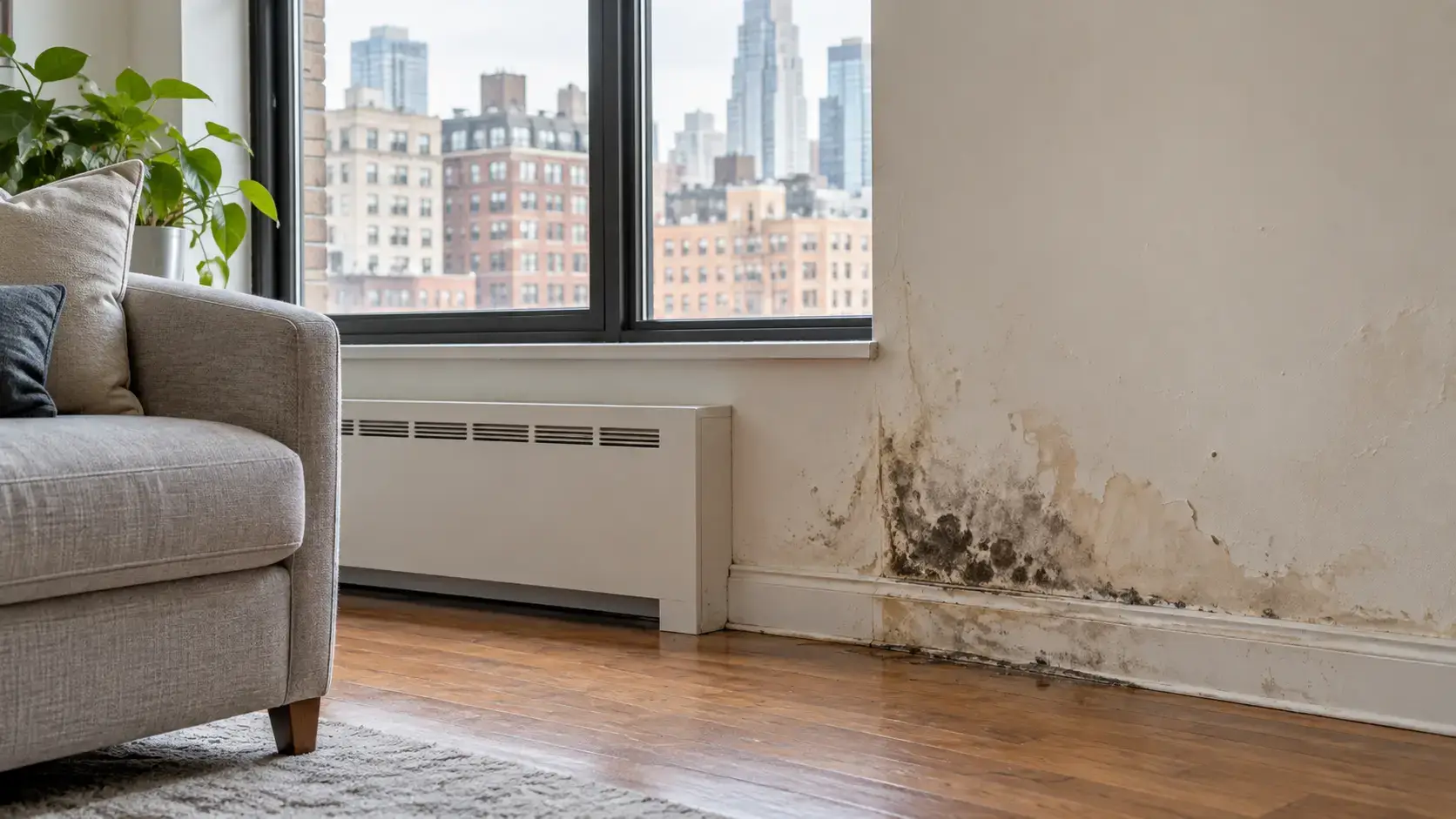
A patch on the wall is a sign, not the whole story. Moisture can keep feeding mold growth. Flood Gone helps NYC property owners assess affected areas, understand the water problem, and plan the cleanup.
FIRST, DON’T HIDE THE PROBLEM
Covering a stain does not solve the water issue behind it. Avoid disturbing moldy materials while you work out the next step. People with asthma, other lung conditions, or weakened immune systems should avoid moldy spaces.
READ EPA CLEANUP GUIDANCE ↗HOW WE HELP
We look at the visible growth and the moisture conditions that let it develop.
Look for leaks, damp materials, and other water conditions affecting the space.
FIND THE CAUSEAssess visible growth and the materials involved to understand the scope.
KNOW WHAT’S INVOLVEDExplain the work appropriate to the surfaces and conditions found.
MAKE A REAL PLANAddress moisture in affected areas and document the work performed.
KEEP WATER IN CHECKPIPE LEAKS
DAMP BASEMENTS
BATHROOMS
WATER DAMAGE
CONDENSATION
WHAT TO EXPECT
Cleaning up mold and correcting moisture go together. We’ll explain the recommended sequence for your property.
Describe what you see or smell, where it is, and any leak or water event you know about.
We examine the affected area and moisture conditions to understand the scope.
We discuss the source of water and the cleanup work suited to the affected materials.
We perform the agreed work and document what was addressed.
THE BIGGER PICTURE
Mold can grow where dampness persists. The plan should account for both the affected materials and the moisture source. If the leak or humidity problem is left in place, growth can return even after cleanup.
DISCUSS YOUR PROPERTY ↗INSURANCE QUESTIONS?
We can document affected areas and the work performed. Whether mold-related work is covered depends on the cause, your policy, and your insurer’s decision. We’ll explain the job details you may need for your records.
ASK US ABOUT THE PROCESS ↗QUICK ANSWERS
Not always. EPA guidance says many areas under about 10 square feet can be handled by the homeowner in most cases. A larger area, contaminated water, or an ongoing moisture problem may call for professional help.
It can if the water or humidity issue remains. Addressing the moisture source is central to a lasting cleanup plan.
If mold is visible, sampling is not always necessary to decide that cleanup is needed. The right approach depends on the situation; we can discuss what we find and whether further assessment makes sense.
CDC advises people with asthma and other lung conditions to stay out of moldy spaces. For health concerns, speak with a healthcare professional. We can discuss the property conditions and the remediation process.
START WITH THE SOURCE
Tell us where the moisture or mold is. We’ll help you understand what to do next.
CALL 917-633-4807 ↗